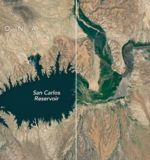
Satellite images captured by NASA have revealed dramatic water loss at Arizona’s San Carlos Reservoir, one of the state’s largest bodies of water, which now appears “near-empty” after months of drought and water releases.
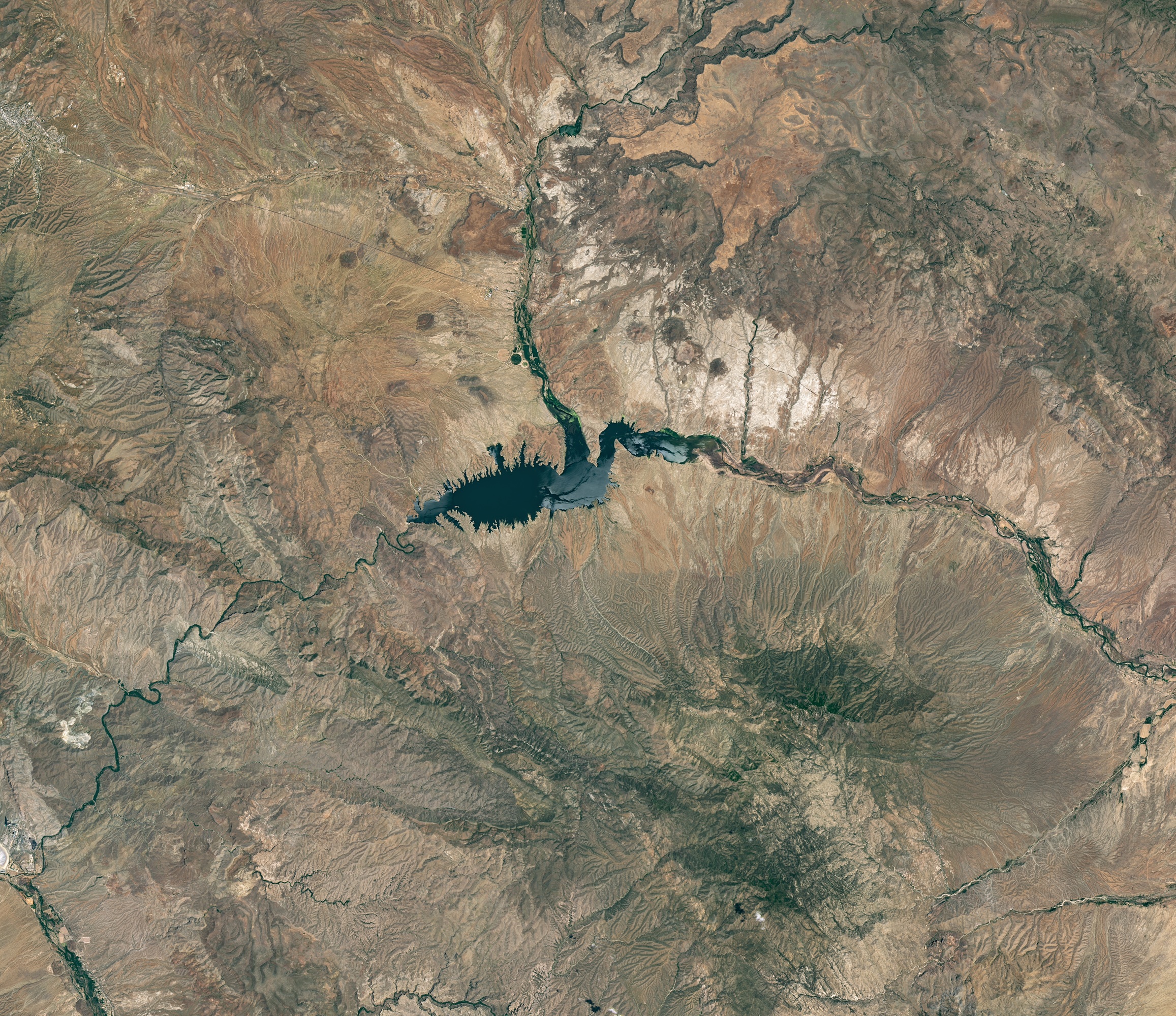
According to NASA’s Earth Observatory, a Landsat image taken on May 22, 2026, shows the reservoir holding just 389 acre-feet of water—“less than 1 percent full”—compared with about 60 percent capacity in June 2023. NASA said the stark change highlights how “drought and water releases drained the Arizona reservoir to levels that have led to widespread fish deaths.”
The reservoir, fed by the San Carlos River, is part of the larger Gila River system, which NASA describes as “among the Southwest’s most important rivers,” supplying water to farms, communities, and wildlife across New Mexico and Arizona.
After
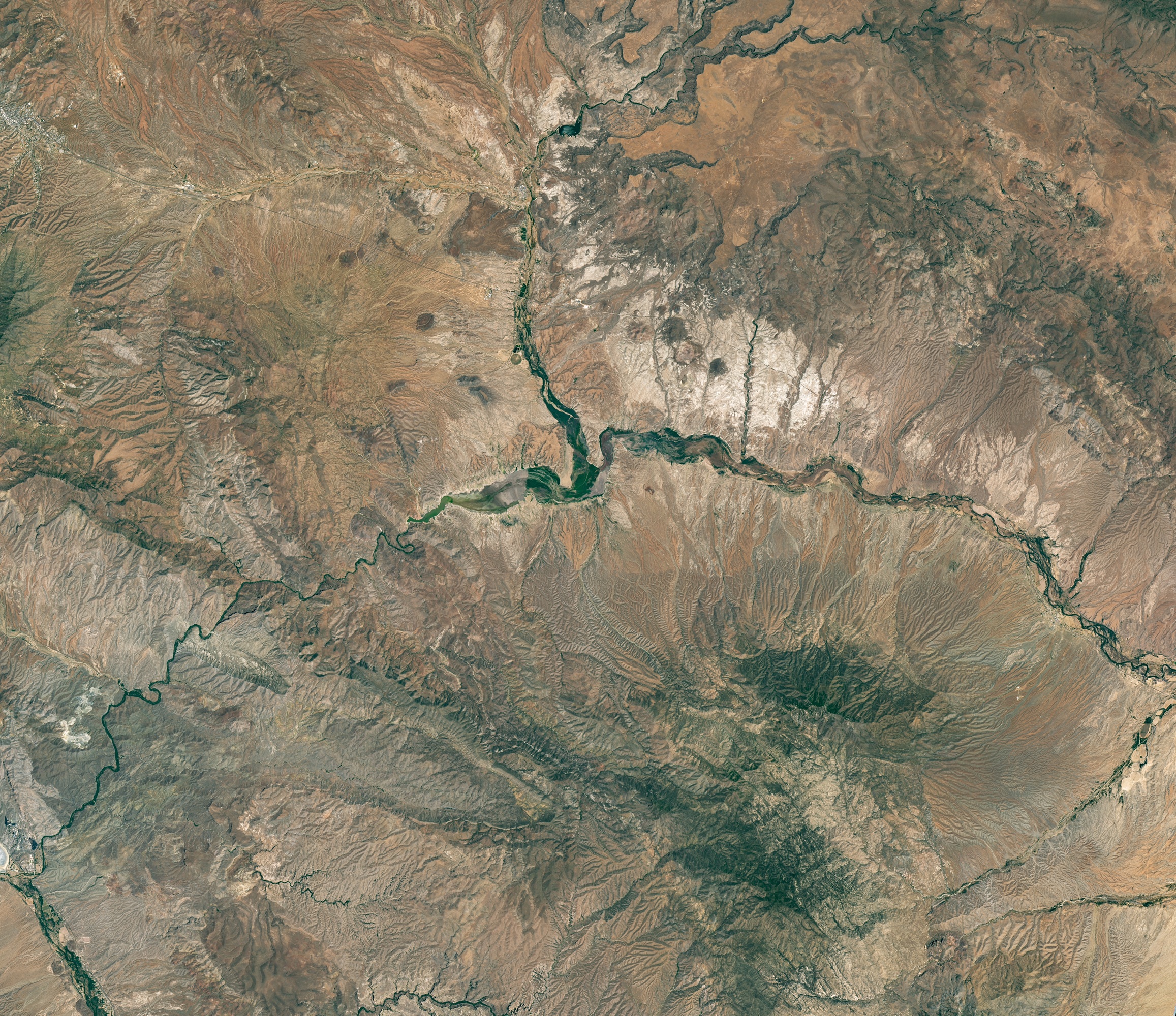
Slide the arrow at the center of the NASA satellite image above to the left to see the San Carlos Reservoir in May 2026, and to the right to view its fuller conditions in June 2023.
What’s Causing Water Levels to Drop?
NASA attributes the San Carlos Reservoir’s decline primarily to a lack of snowfall in the Gila River watershed. In 2026, snowpack in the region was just 2 percent of its historical median, sharply limiting spring runoff.
The reduced snowmelt resulted in April streamflow at only 39 percent of normal, leaving the reservoir with little inflow. At the same time, mandatory releases of water for downstream agricultural use further depleted already limited reserves, the space agency explained.
The combination of low inflows and sustained outflows proved critical. Local officials described the fish kill as the result of recent drought conditions and water releases from the dam, which led to a near-total collapse of the aquatic ecosystem.
This is not the first time the reservoir has reached critically low levels. NASA noted that the lake has experienced similar conditions multiple times since it was first filled in 1930, including major fish kills in 1976 and 2018. In 1976 alone, around 5 million fish died, and it reportedly took about five years for the ecosystem to recover.
Prospects for Recovery
Despite the severity of current conditions, there is some potential for recovery. NASA notes that the Gila River’s flow is highly variable and can rebound quickly with sufficient rainfall.
A seasonal outlook issued by the National Oceanic and Atmospheric Administration (NOAA) in May 2026 projected a 33 to 50 percent chance of above-average rainfall in the region during the summer monsoon season. The strengthening El Niño pattern in the Pacific could also increase the likelihood of heavy rains across the U.S. Southwest, offering a possible path to replenishing the reservoir.
For now, NASA’s latest images from space provide a stark visual of how quickly a major water body can decline, highlighting the fragile balance between climate variability, water management, and the needs of communities that depend on these vital resources.
Water Shortages Across the U.S.
The situation in Arizona mirrors broader water stress across the United States. According to NOAA’s drought reporting, drought conditions affected nearly every region of the country in 2025, with 35.8 percent of the nation experiencing drought by the end of the year.
Recent U.S. Drought Monitor data indicate ongoing water shortages in multiple patches across the country, including the Southwest, Midwest, and parts of the East, which are experiencing moderate to extreme drought conditions. In some states, including Idaho, Colorado, and North Carolina, portions of land fall into exceptional drought categories, reflecting widespread stress on rivers, reservoirs, and groundwater supplies.
These shortages have led to impacts such as record-low river levels, reduced agricultural output, and increased risk of wildfire and ecosystem collapse, underscoring the national scale of the issue.
Do you have a tip on a science story that Newsweek should be covering? Do you have a question about water shortages? Let us know via life@newsweek.com.

 Photographer Finds Locations Of 1960s Postcards To See How They Look Today, And The Difference Is Unbelievable
  Hij zet 3 IKEA kastjes tegen elkaar aan en maakt dit voor zijn vrouw…Wat een gaaf resultaat!!
  Scientists Discover 512-Year-Old Shark, Which Would Be The Oldest Living Vertebrate On The Planet
  Hus til salg er kun 22 kvadratmeter – men vent til du ser det indvendigt
  Superknepet – så blir snuskiga ugnsformen som ny igen!
  Meteorite That Recently Fell in Somalia Turns Out to Contain Two Minerals Never Before Seen on Earth
  Nearly Frozen Waves Captured On Camera By Nantucket Photographer
  It’s Official: Astronomers Have Discovered another Earth