April’s Full Pink Moon will rise as a ‘micromoon’ this weekend — what to expect from the smallest full moon of 2025

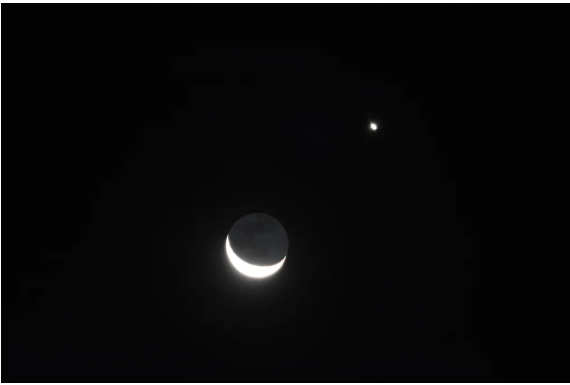
Discover when, how and where to watch the smallest full moon of the year take center stage on April 12. April's full Pink Moon, the smallest of 2025, rises on April 12. (Image credit: Vicki Smith via Getty Images) Skywatchers, get ready for a dazzling lunar display this weekend: April's full moon, known as the Pink Moon or Paschal Moon, will rise on the evening of Saturday

Pink Moon: Full Micromoon of April 2025

Prepare for the Full Pink Moon—and the Paschal Moon! Step outside on Saturday, April 12, to witness April’s full Pink Moon. This Paschal Moon marks the first full Moon of spring and is used to determine the date of Easter. This month also brings a micromoon. Curious about how it compares to a supermoon? Discover the story behind the “Pink Moon” and what makes this lunar event unique.

How to See Halos, Sun Dogs and Other Delights of the Daytime Sky

Ice crystals suspended in the air put on a gorgeous show if you know when and where to look A halo around the sun—like this one over Germany’s Ore Mountains—comes from light shining through airborne ice crystals. Night isn’t the only time to see gorgeous things in the sky. Some of the most awe-invoking heavenly phenomena can only happen during the day, when the sun is s

Point Nemo: the most isolated place on Earth

Lost in the heart of the Pacific Ocean, Point Nemo is much more than just a geographical landmark. Located nearly 2,700 kilometres from the nearest land, this place is the pole of oceanic inaccessibility, the furthest point from any land surface. Fascinating and mysterious, it intrigues scientists and adventure-seekers alike. What is Point Nemo? Discovered in 1992 by the Canadian-Croatian

2025 Winter maximum sea ice extent in Arctic smallest on record

The National Snow and Ice Data Center reports that Arctic sea ice appears to have reached its seasonal maximum extent on March 22, 2025, 10 days later than the 1981-2010 average. Despite the late peak, it was the lowest maximum extent of the 47-year satellite era, which began in 1979. Sea ice concentration across the Northern Hemisphere on March 22, 2025, ranged from 15 percent (medium

April’s full ‘Pink Moon’ rises this weekend — here’s how to see it, and why it’s so special

Also known as the 'Paschal Moon,' April's full 'Pink Moon' will rise alongside Spica, one of the brightest stars in the night sky, on April 12. April's full moon will shine close to Spica, the brightest star in the constellation Virgo. (Image credit: Katrin Ray Shumakov via Getty Images) On Saturday, April 12, look east at dusk to see the next full moon rise into the s

April full moon 2025: The Pink Moon hides one of the brightest stars in the sky

The full moon will occult the star Spica in the Virgo constellation this month. April's full moon is the Pink Moon, rising April 12. It will also be a micromoon, appearing slightly smaller than usual. (Image credit: Getty Images) The full moon of April, called the Pink Moon or Paschal Moon, will occur in the eastern U.S. during the evening hours of April 12, at 8:22 p.m. E

Adorable dire wolf pups mark ‘world’s first de-extinction,’ Colossal Biosciences says

Dire wolves, made famous by HBO's Game of Thrones, have been extinct for around 12,500 years. But thanks to genetic engineers at biotech company Colossal Biosciences, these majestic predators are back. Romulus and Remus are two 6-month-old dire wolves, created by genetically engineering cells from living gray wolves. (Image credit: Colossal Biosciences) Dire wolves wen

How the Sahara Desert Went from a Lush, Inhabited Land to a Wasteland

Today, the Sahara Desert, which covers much of North Africa, is regarded as the world’s largest hot desert and the world’s third largest desert, after the deserts of Antarctica and the northern Arctic. However, this desert was once bursting with vegetation, grasslands, lakes and rivers, providing a suitable environment for humans to inhabit. So how did such an enormous transformation happen?

Our moon has been slowly drifting away from Earth over the past 2.5 billion years

We still don't have a full understanding of the evolution of the Earth-moon system. (Image credit: Elen11/Getty Images) This article was originally published at The Conversation. The publication contributed the article to Space.com's Expert Voices: Op-Ed & Insights. Joshua Davies, Professor of Earth and atmospheric sciences, Université du Québec à Montréal (UQAM