Commenting on the WWA analysis, Simon Stiell, the UN’s climate chief, said: “Climate change is running rampant, caused by the world’s addiction to burning coal, oil and gas. But the solutions are equally clear: a faster shift to clean energy – which is now much cheaper than fossil fuels – as well as protecting forests and building climate resilience.”
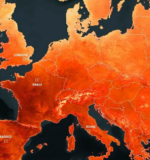
The WWA team used both observed and reliable forecast temperature data to analyse the hottest three-day period across a large area of western Europe, which is sitting under a “heat dome”. Using peer-reviewed methods, they found unequivocally that climate change was the driving force behind the severity of the heat.
They ruled out natural variability of the weather, in particular any influence from the El Niño event that has begun in the Pacific Ocean. The current weather pattern, a blocked high-pressure system trapping hot air over Europe and drawing warm air up from the Sahara, is not unusual in summer, the scientists said. Instead, the level of heat has been supercharged by global heating.
Carolina Pereira Marghidan, of the Red Cross Red Crescent Climate Centre, said: “After the devastating 2003 heatwave in Europe, many countries invested in early warning systems and action plans. Research shows that those have saved many lives, but it’s not enough.”
She said intensifying heat was increasingly affecting health, transport, energy systems and daily life. “We need greater investment in heat-resilient homes, cities and infrastructure to keep people safe.”
The UK government’s official adviser, the Climate Change Committee, said in May that the country’s infrastructure was “built for a climate that no longer exists” and needed urgent improvement to protect people from the climate crisis. The UK Health Security Agency (UKHSA) found that more than 10,000 people died in Britain owing to summer heatwaves between 2020 and 2024.
On Wednesday, the London ambulance service responded to its highest ever number of life-threatening emergencies in a single day – 641. Older people, children and those with vulnerabilities are most at risk, but the current red alerts from the UKHSA and Met Office warn that everyone is in danger. On Thursday the UKHSA extended its red heat-health alert by 24 hours, to 11pm on Friday.
A study of a smaller and less intense European heatwave in 2024 found that in 12 cities alone, more than 2,300 people lost their lives in three days because of the higher temperatures. “We found two-thirds of the 2,300 would not have died if it wasn’t for climate change,” said Prof Friederike Otto, a climate scientist at Imperial College London and a co-founder of WWA.
“Scientists like me are beginning to sound like a broken record, reacting year after year to heat extremes that climb ever higher,” she said. “Yes this is climate change, yes it’s us, yes we have the solutions, no we’re not implementing them fast enough. It’s really now a question of what kind of future we want for ourselves, and whether we’re willing to do what it takes to secure it.”
Last October, health experts said rising global heat was now killing one person a minute around the world.
Super El Niño: How One Ocean Can Change the World