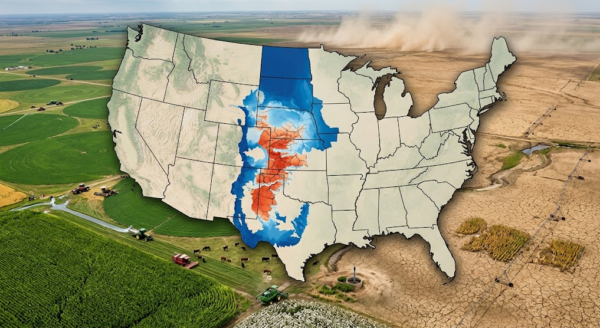
Beneath the most fertile agricultural lands of the United States lies a silent giant formed over thousands of years: the Ogallala Aquifer (High Plains Aquifer). However, today, this critical groundwater resource is sounding the alarm under the demands of modern agriculture. This detailed data map we provided shows not just the beginning of a crisis, but its very heart.
Deep beneath the Great Plains lies a hidden, ancient ocean of fresh water that has fueled American agriculture for generations. Known as the Ogallala Aquifer, this massive underground reservoir is one of the most critical water sources in the United States.
However, a silent crisis is unfolding: the Ogallala is being drained far faster than nature can replenish it. This depletion threatens not just the farmers who rely on it, but the entire American food supply chain.
What is the Ogallala Aquifer?
Stretching across eight Great Plains states—from South Dakota all the way down to Texas—the Ogallala Aquifer is the lifeblood of the American heartland. It serves as the foundation for a massive agricultural economy, supporting the production of corn, wheat, cotton, and livestock.
To understand its scale, consider these vital statistics:
| Feature | Impact & Significance |
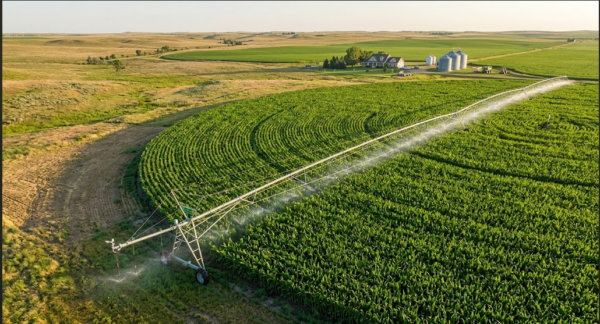
Irrigation SupplyProvides roughly 30% of all groundwater used for irrigation in the U.S.
Agricultural Output Supports approximately 20% (one-fifth) of the nation’s total agricultural output.
Drought Buffer Acts as an essential safety net, allowing crops to survive during periods of low rainfall.
The Core Problem: A Rapidly Draining Resource
The fundamental issue facing the Ogallala is a matter of simple, unsustainable math. The aquifer is being pumped at industrial rates, while its natural refill rate (recharge) is agonizingly slow.
In many regions across the Great Plains, the natural recharge rate is less than an inch per year. Meanwhile, large-scale agricultural irrigation has extracted massive volumes of groundwater for decades. According to data from the U.S. Geological Survey (USGS), water levels in certain sections of the High Plains aquifer system have plummeted by more than 200 feet since large-scale pumping began.
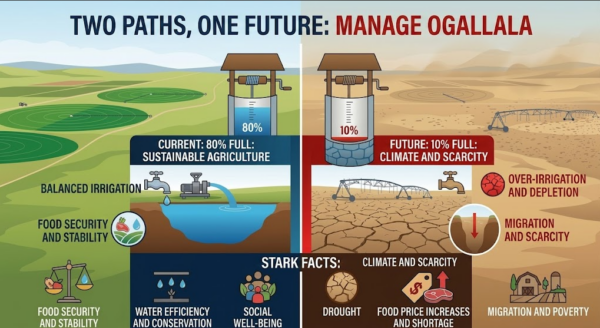
“The Ogallala is often described as ‘fossil water,’ built up over thousands to millions of years. Once heavily depleted, it cannot be quickly replaced.”
The Ripple Effect: From Farm to Table
The shrinking of the Ogallala Aquifer is not just a localized problem for the states sitting directly above it; it is a national issue with far-reaching consequences.
1. Transforming the Agricultural Landscape As the water table drops, the safety net that protects farmers against drought severely weakens. Experts predict a shift in farming strategies:
-
Instead of spreading a dwindling water supply over the same amount of land, farmers are likely to shrink the amount of land they irrigate.
-
They will concentrate their water use to keep yields high on smaller plots.
-
More fields will be forced to rely entirely on unpredictable rainfall (dryland farming), making overall harvests highly vulnerable to drought.
2. Rising Grocery Prices The impact of a shrinking aquifer will inevitably reach the supermarket. A significant portion of the corn grown over the Ogallala is used to feed livestock. If water shortages cause crop yields to drop:
-
The cost of livestock feed will surge.
-
This will directly affect the production costs for meat and dairy.
-
Consumers will ultimately face higher prices at the grocery store.
Looking Ahead: The Challenge of Adaptation
The reality of the Ogallala Aquifer is stark: we cannot simply “find more water” to replace what has been lost. Because this fossil water accumulated over millennia, it will take millennia to return once it is gone.
The challenge now shifts from exploitation to preservation and management. To protect one of America’s most vital food-producing regions, agricultural sectors must figure out how to adapt. This includes:
-
Investing in efficient irrigation technologies.
-
Transitioning to less water-intensive crops.
-
Implementing strict groundwater monitoring and management policies.
The clock is ticking for the Ogallala. How we choose to manage this resource today will determine the security and affordability of our food supply tomorrow.
————————————————————————————————————————————————
The Ocean’s Mysterious Cold Zone

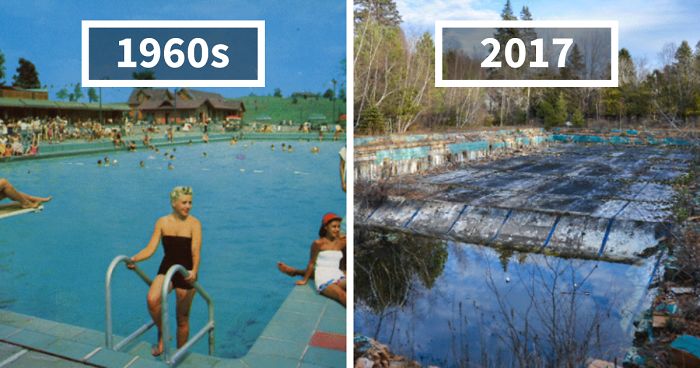 Photographer Finds Locations Of 1960s Postcards To See How They Look Today, And The Difference Is Unbelievable
 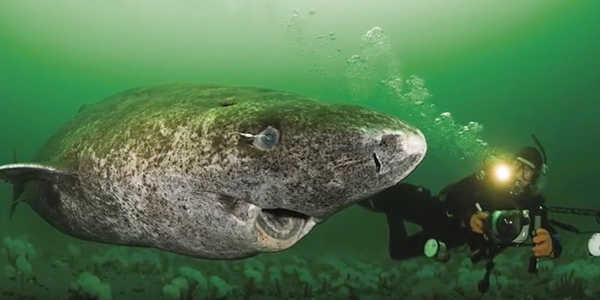 Scientists Discover 512-Year-Old Shark, Which Would Be The Oldest Living Vertebrate On The Planet
  Hus til salg er kun 22 kvadratmeter – men vent til du ser det indvendigt
  Superknepet – så blir snuskiga ugnsformen som ny igen!
  Meteorite That Recently Fell in Somalia Turns Out to Contain Two Minerals Never Before Seen on Earth
  Nearly Frozen Waves Captured On Camera By Nantucket Photographer
  It’s Official: Astronomers Have Discovered another Earth