Nature’s most pungent performance is underway at the San Diego Botanic Garden. A rare and foul-smelling “corpse flower” is in full bloom, attracting curious visitors and pollinating insects alike.
The corpse flower, scientifically known as Amorphophallus titanum, is renowned for its pungent odor, often described as a mix of rotting meat and decaying fish. This unpleasant scent serves a vital purpose by attracting carrion-eating insects that pollinate the plant.
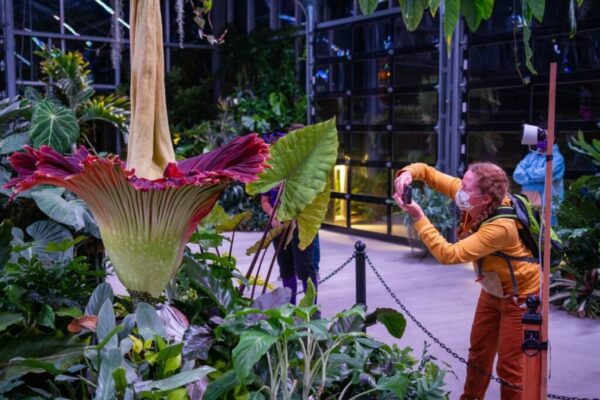
The Titan Arum, as it’s also called, is a truly remarkable plant. Its flower spike is the longest unbranched inflorescence in the world, capable of reaching heights of over 10 feet. However, this spectacular bloom is fleeting, lasting only two or three days before collapsing.
A Rare and Endangered Plant
Native to the Indonesian island of Sumatra, the corpse flower is an endangered species. Fewer than 1,000 plants remain in the wild. To ensure the survival of this unique plant, botanical gardens worldwide work together to conserve and propagate it.

At the San Diego Botanic Garden, experts carefully monitor the corpse flower’s growth using infrared cameras and thermometers. This helps them predict the timing of the bloom and ensure that it’s pollinated with pollen from another plant.
A Must-See Event
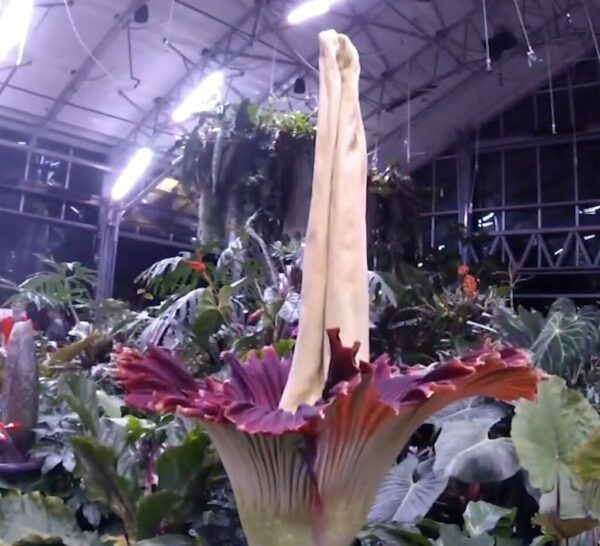
The corpse flower’s bloom is a rare and unforgettable event. If you’re lucky enough to witness it, you’ll be treated to a truly unique horticultural spectacle. So, head on over to the San Diego Botanic Garden and experience the extraordinary power of nature.



 Photographer Finds Locations Of 1960s Postcards To See How They Look Today, And The Difference Is Unbelievable
  Hij zet 3 IKEA kastjes tegen elkaar aan en maakt dit voor zijn vrouw…Wat een gaaf resultaat!!
 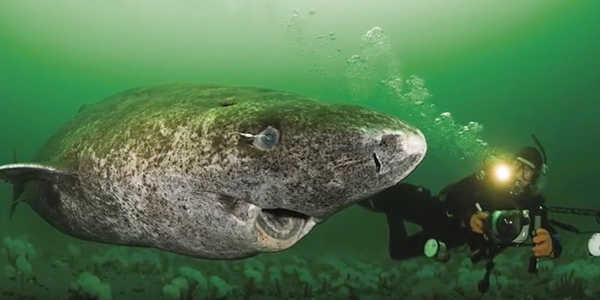 Scientists Discover 512-Year-Old Shark, Which Would Be The Oldest Living Vertebrate On The Planet
  Hus til salg er kun 22 kvadratmeter – men vent til du ser det indvendigt
  Superknepet – så blir snuskiga ugnsformen som ny igen!
 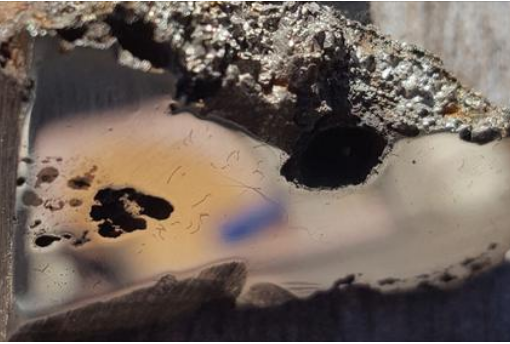 Meteorite That Recently Fell in Somalia Turns Out to Contain Two Minerals Never Before Seen on Earth
  Nearly Frozen Waves Captured On Camera By Nantucket Photographer
  It’s Official: Astronomers Have Discovered another Earth