Your guide to October’s full Hunter’s Moon, from peak times to skywatching highlights.
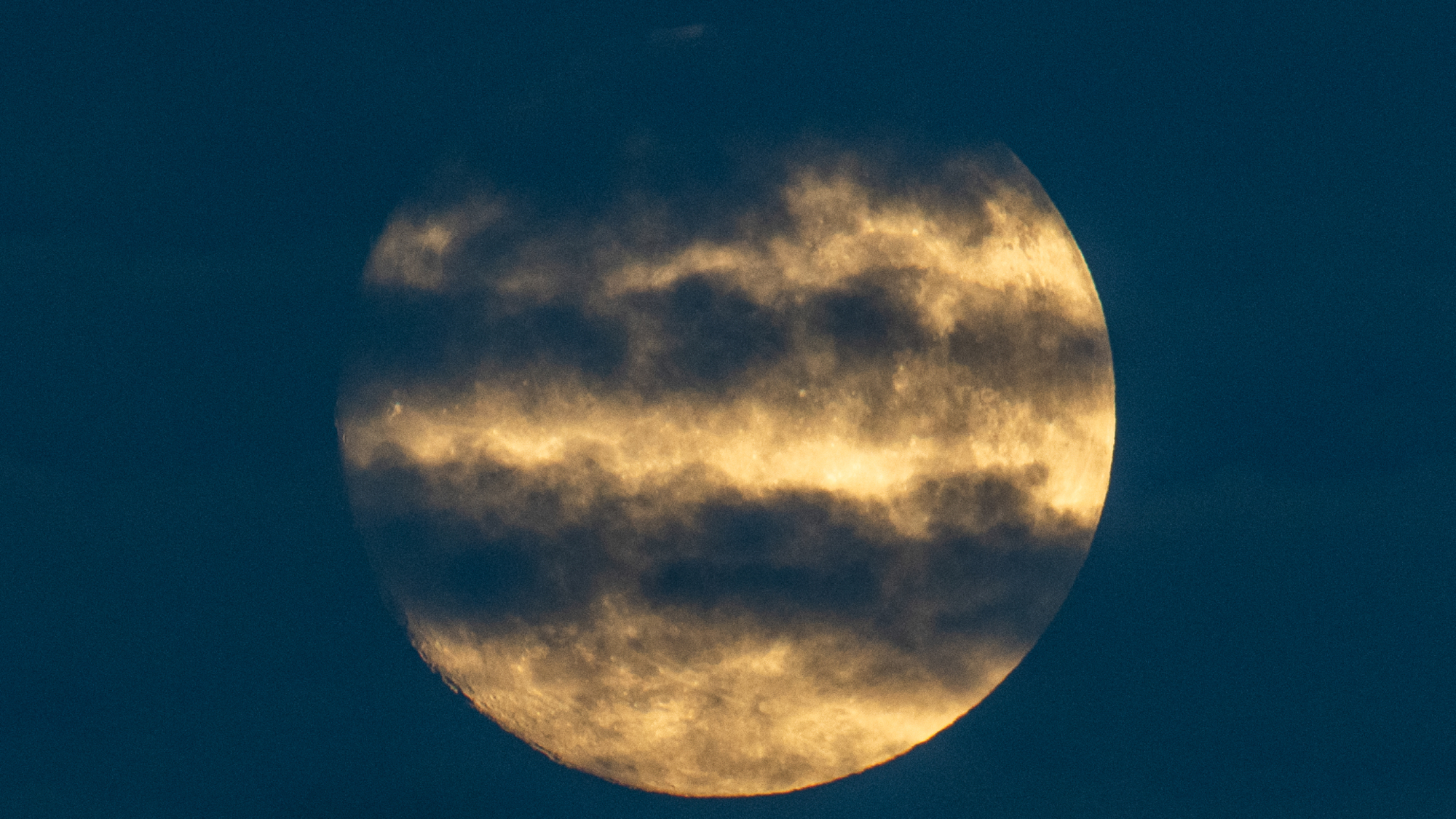
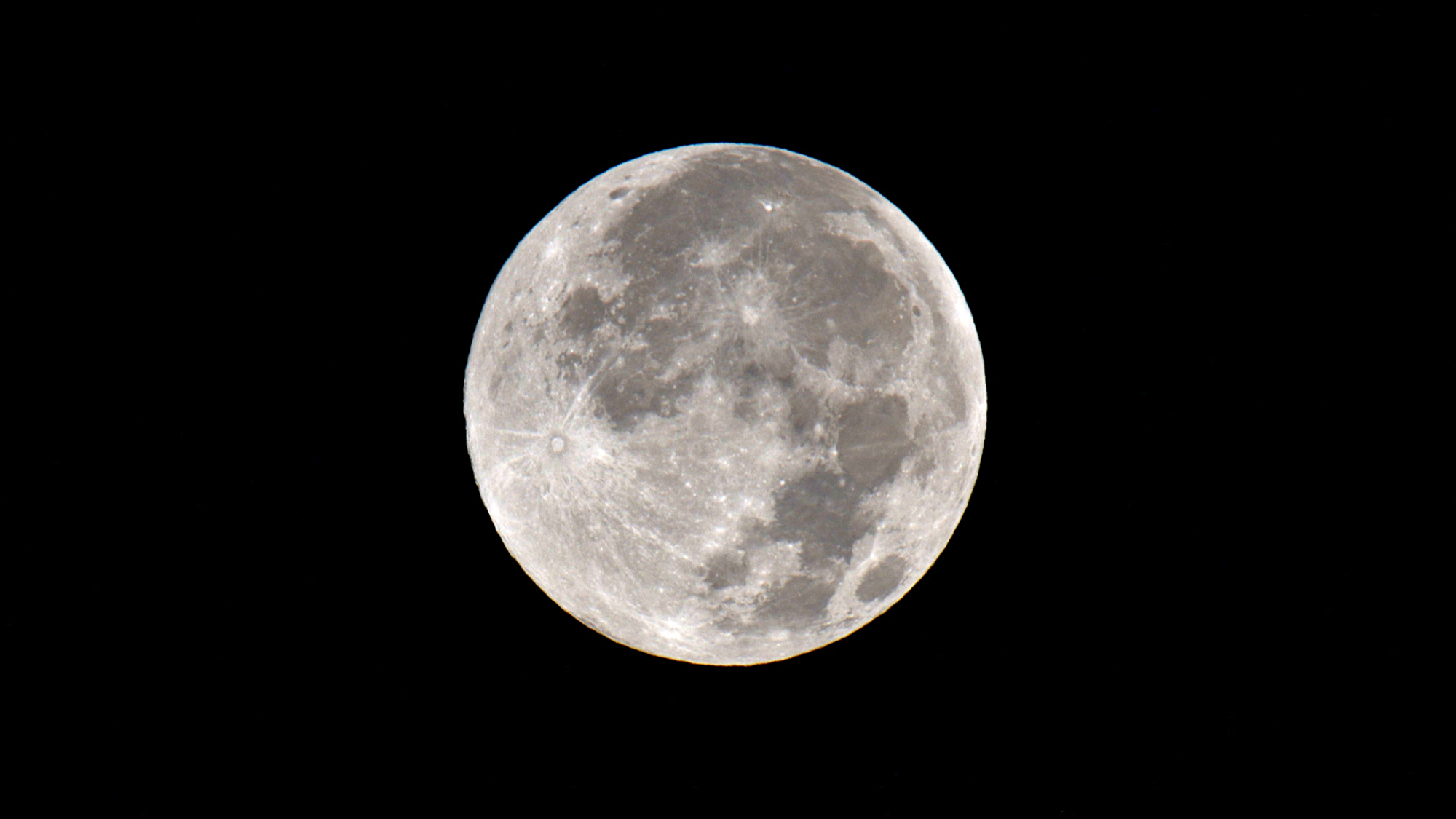
The October full moon reaches peak illumination at 12:11 a.m. EDT (0411 GMT) on Oct. 26, when the moon shines opposite the sun in Earth’s sky and appears fully lit from our perspective.
October’s full moon is traditionally known as the Hunter’s moon, because it rises around the time when farmers have reaped the fields, making it easier for hunters to spot and catch animals to prepare food for winter, according to the Old Farmer’s Almanac.
It’s a stunning opportunity to see the entire Earth-facing lunar disk laid bare before the shadowy terminator returns to hide its eastern limb from view.
When to see the October full moon
The Hunter’s Moon stalks into the eastern sky at sunset on Oct. 25, when you may see it turn a subtle yellow-orange hue, as the blue wavelengths of sunlight reflected off its surface are scattered while passing through the dense layer of atmosphere close to the horizon.
You may think the lunar disk is particularly big around moonrise, but it’s actually the same angular size as when it appears directly overhead. What you’re seeing is a phenomenon called the “Moon Illusion,” wherein our brains trick us into thinking the moon is larger than it is while close to the horizon, with foreground objects for reference.
The table below details local full moon timings for when the moon is 100% illuminated for a selection of cities spread across the globe (local moonset and moonrise times will vary based on your location):
Local full moon timings for October 2026
| City | Local time |
|---|---|
| New York | 12:11 a.m. EDT on Oct. 26 |
| London | 4:11 a.m. GMT on Oct. 26 |
| Beijing | 12:11 p.m. CST on Oct. 26 |
| Tokyo | 1:11 p.m. JST on Oct. 26 |
| Sydney | 3:11 p.m. AEDT on Oct. 26 |
Why it’s called the Hunter’s Moon
The October full moon is commonly known as the Hunter’s Moon because it traditionally rises around the time that hunters would take to the newly harvested fields to catch animals to prepare as food for the winter. Its light also allowed the hunters to pursue their quarry long into the night, per the Old Farmer’s Almanac.
Native American peoples also had their own names for the October moon. To the Cree it is the “Migrating Moon”, after the southward journey taken by many birds around the time of its appearance, while the Ojibwe and Haida know it as the Ice Moon, or Freezing Moon.

It’s also known as the “Seed Fall Moon” by the Celtic people of central and western Europe and as the Sanguine or Blood Moon by some who hold pagan beliefs, according to Time and Date.




 Photographer Finds Locations Of 1960s Postcards To See How They Look Today, And The Difference Is Unbelievable
 Hij zet 3 IKEA kastjes tegen elkaar aan en maakt dit voor zijn vrouw…Wat een gaaf resultaat!!
 Scientists Discover 512-Year-Old Shark, Which Would Be The Oldest Living Vertebrate On The Planet
 Hus til salg er kun 22 kvadratmeter – men vent til du ser det indvendigt
 Superknepet – så blir snuskiga ugnsformen som ny igen!
 Meteorite That Recently Fell in Somalia Turns Out to Contain Two Minerals Never Before Seen on Earth
 Nearly Frozen Waves Captured On Camera By Nantucket Photographer
 It’s Official: Astronomers Have Discovered another Earth