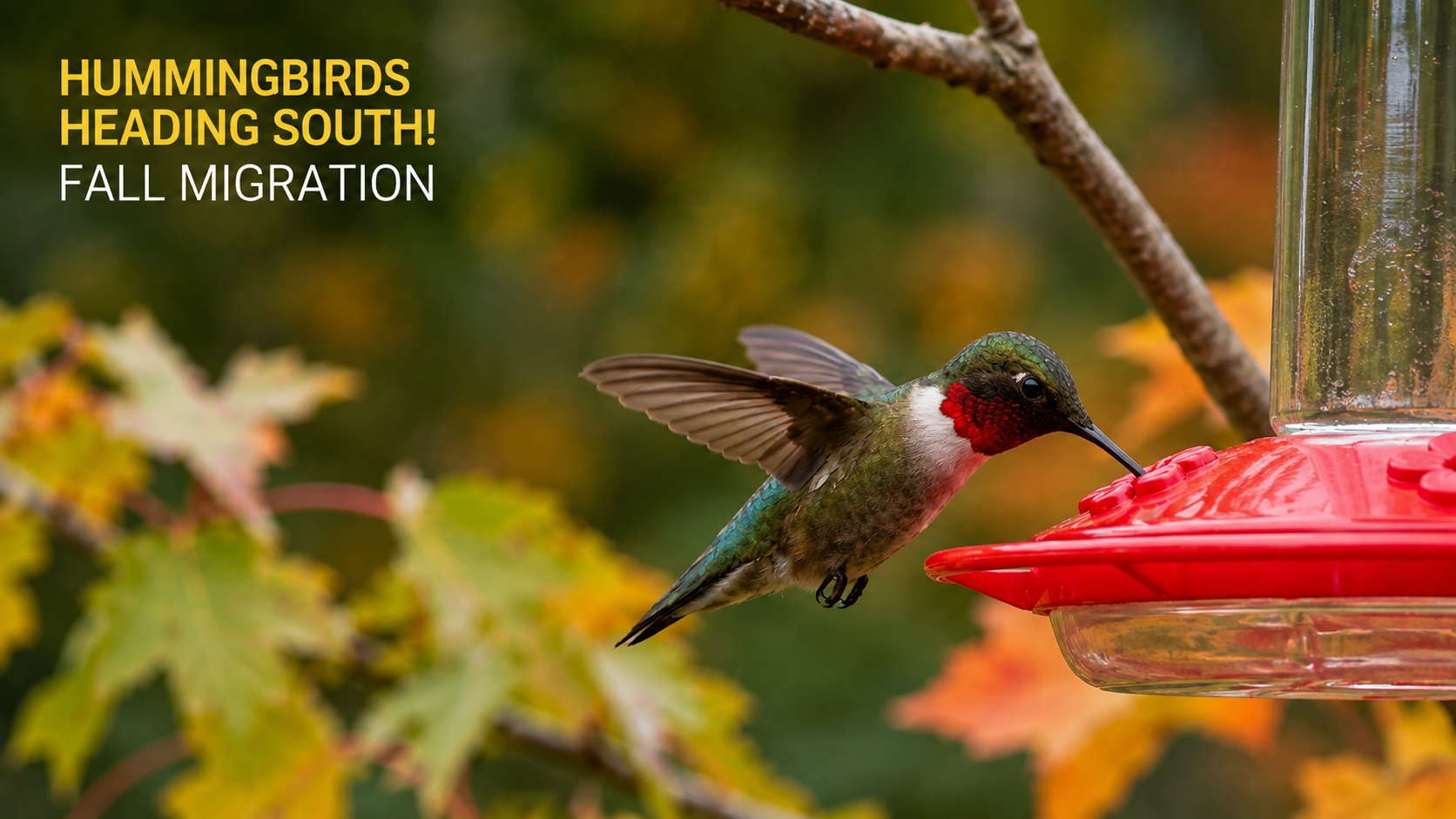
Ruby-throated hummingbirds are starting their fall migration, and a new map shows when they typically move south across North America.
Those tiny flashes of green buzzing around backyard feeders will not be around much longer.
Fall migration is about to begin for birds across North America, including one of the most beloved backyard visitors: the ruby-throated hummingbird.
Ruby-throated hummingbirds migrate north across the central and eastern United States and into Canada between March and May. After spending the summer darting between flowers and feeders, they head south again in autumn before spending the winter in parts of Central and South America.

A close-up of a ruby-throated hummingbird. (Getty Images/Hubert (Buddy) Woods/500px)
Time is running out to spot ruby-throated hummingbirds in some areas, with southward migration already underway from Minnesota to Maine.
Migration will ramp up from mid- to late September as cooler weather arrives across the continent. By the start of October, the fast-moving birds may only be spotted along the immediate Gulf Coast.
A new map shared with AccuWeather by the Mississippi State University Extension Service shows when ruby-throated hummingbirds typically migrate south across different parts of North America.

All dates and ranges estimated from eBird Data 2009-2023.” Fink, et al. 2024. eBird Status and Trends, Data Version: 2023; Released: 2025. Cornell Lab of Ornithology, Ithaca, New York.
Not every ruby-throated hummingbird has the iconic red feathers below the beak. Males are the only ones with the ruby-colored throat, while females and juvenile hummingbirds have a white throat.
How to prepare for fall migration
Hummingbird feeders are a common sight in backyards, but the Mississippi State University Extension Service (MSUES) told AccuWeather that people should keep them clean and well-maintained for the birds.
-
Maintain hummingbird feeders using one part refined white sugar with four parts water. Mix until the sugar is dissolved. Do not add food coloring to the mix.
-
Monitor feeders, as the mixture can spoil in two to three days during hot and sunny conditions. If the mixture turns an opaque, milky white, dump it out and thoroughly clean the feeder. If a feeder is not dishwasher safe, wash it vigorously with hot water and soap.
-
Refill the feeder with fresh solution.
“Using the map above and monitoring hummingbird presence at your feeder is the best way to know when to take your feeder down for the year,” MSUES told AccuWeather. “Residents across the Gulf Coast may choose to keep feeders up well into the late fall and early winter.”

A ruby-throated hummingbird at a feeder. (Getty Images/Douglas Sacha)
Ruby-throated hummingbirds are just one of hundreds of bird species that migrate across North America every year. Experts recommend properly cleaning all bird feeders, especially during migration season, to help prevent the spread of sickness and disease among birds that stop by for food.
“Bottom line, a good rule to live by is only keep the feeders up if you’re able to maintain them,” MSUES said.




 Photographer Finds Locations Of 1960s Postcards To See How They Look Today, And The Difference Is Unbelievable
  Hij zet 3 IKEA kastjes tegen elkaar aan en maakt dit voor zijn vrouw…Wat een gaaf resultaat!!
  Scientists Discover 512-Year-Old Shark, Which Would Be The Oldest Living Vertebrate On The Planet
  Hus til salg er kun 22 kvadratmeter – men vent til du ser det indvendigt
  Superknepet – så blir snuskiga ugnsformen som ny igen!
  Meteorite That Recently Fell in Somalia Turns Out to Contain Two Minerals Never Before Seen on Earth
  Nearly Frozen Waves Captured On Camera By Nantucket Photographer
  It’s Official: Astronomers Have Discovered another Earth