Image caption,
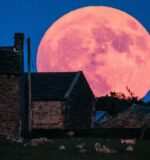
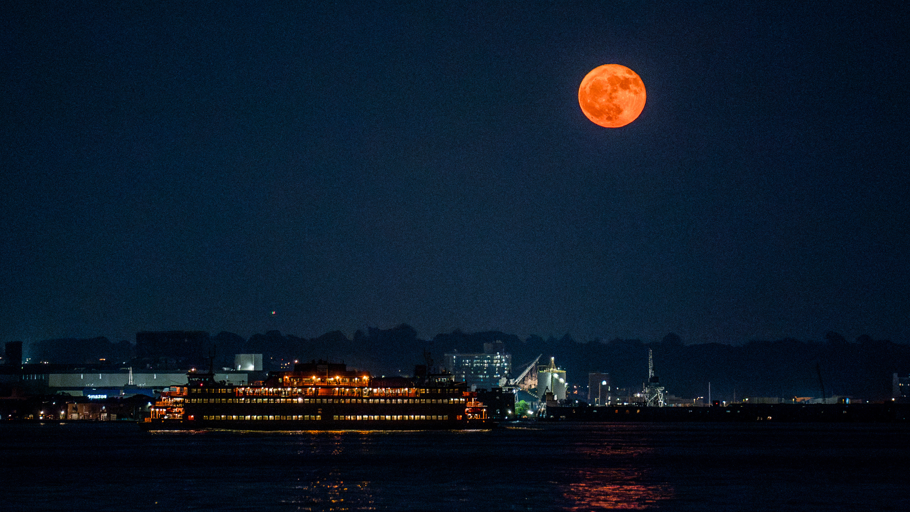
In summer, full Moons appear low in the sky in the UK and can have an orange hue due to atmospheric conditions
On the evenings of 29 and 30 June 2026, the full Moon will rise low above the horizon, marking the appearance of the Strawberry Moon, the first full Moon of summer.
If you’re a full Moon fan, summer full Moons can be an amazing sight to see because they stay low in the sky and close to the horizon, which means they often look enormous and exhibit a slightly orange tint (more on this below).
And yet, for that same reason, they can be trickier to spot than winter full Moons.
Here, we’ll go through everything you need to know about this week’s full Moon, the Strawberry Moon of 2026.
Where to look and when
A good tip for remembering where and when a full Moon will rise is that the full Moon mirrors what the Sun does.
That is, after all, why we get full Moons. They happen because the Moon is opposite the Sun, with Earth in the middle.
As a result, the Earth-facing side of the Moon is completely basked in sunlight, giving us a full Moon.
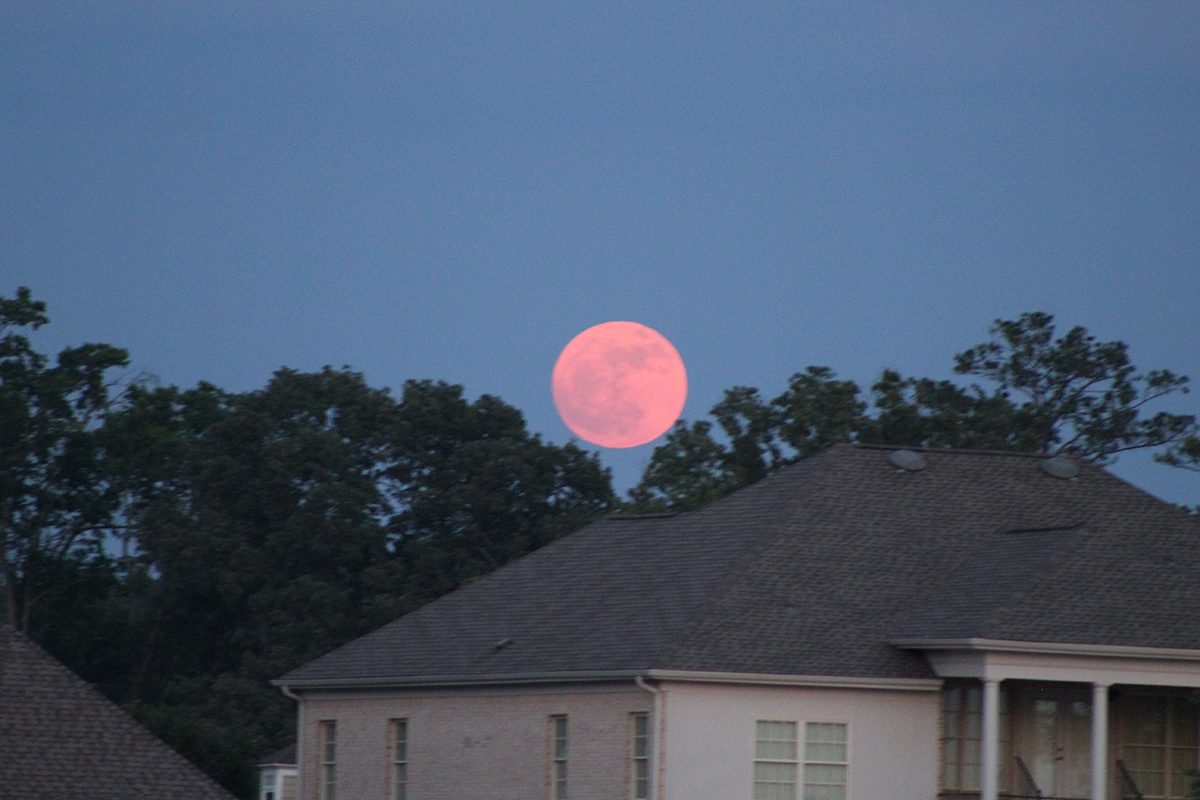
And because the full Moon is opposite the Sun, that means the full Moon rises in the eastern part of the sky, just as the Sun is setting in the west.
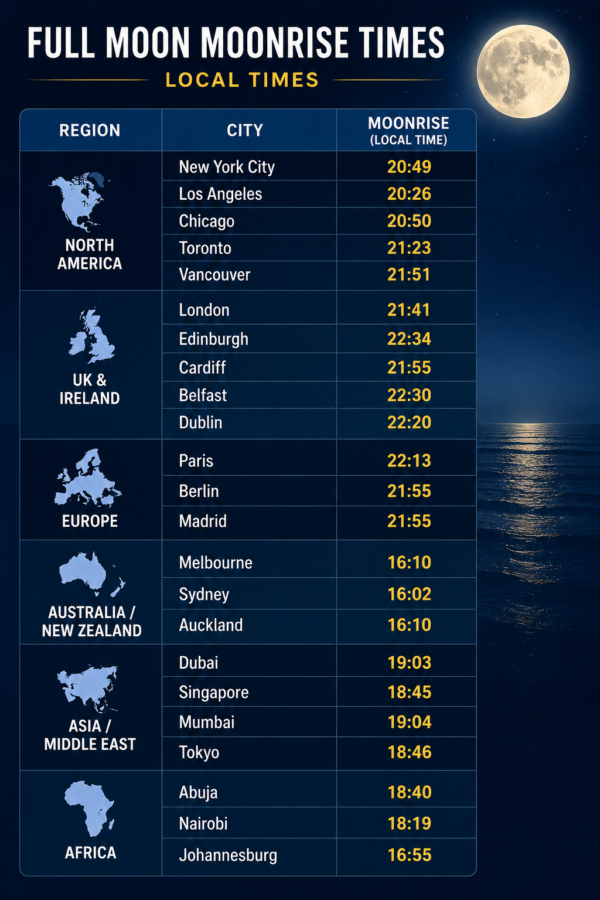
If you want to see the Strawberry Moon rise tonight, look towards the southeastern horizon just after sunset.
It will then track across the southern sky throughout the night, setting in the southwest before sunrise the following morning.
Why it’s the Strawberry Moon
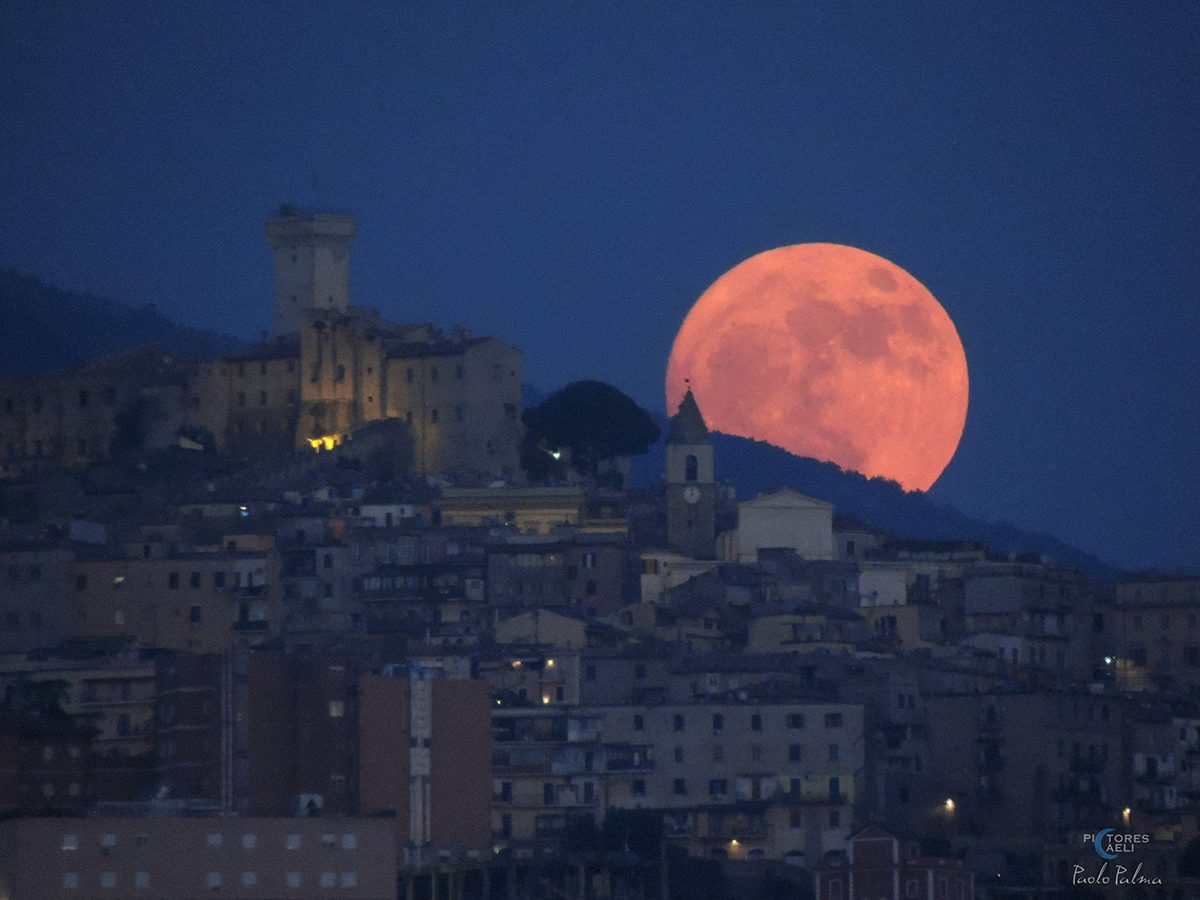
Each of the monthly full Moons has gained more than a few nicknames over the centuries, and these nicknames reflect annual events or occurrences in nature.
‘Strawberry Moon’ is the name given to the June full Moon because June is traditionally the month for picking strawberries.
Full Moon nicknames hark back to a time before built-up cities and artificial light pollution, when the monthly full Moon was more noticeable, acting as a reminder of the passage of time and the changing of the seasons.
But ‘Strawberry Moon’ is just that: a nickname. You shouldn’t expect the full Moon to look any more like a strawberry than usual!
However, you might notice it is a different colour, and that’s explored in our next Strawberry Moon fact.
Does the Strawberry Moon look orange? You’re not seeing things!
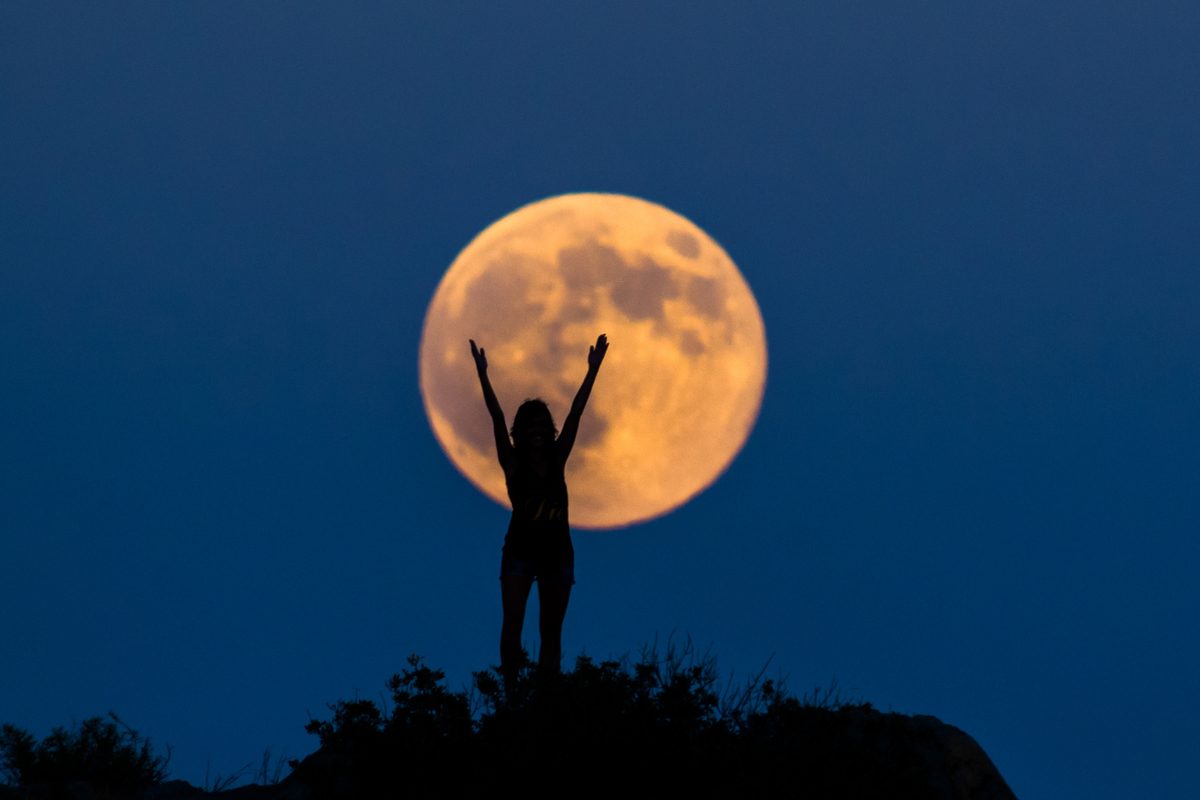
Does the Moon look more orange than usual? The reason this happens is because the Strawberry Moon stays quite low, close to the horizon.
This is again because the full Moon mirrors the Sun. During summer months, the Sun rises high in the sky and the full Moon stays low.
Conversely, in winter months, the Sun stays low in the sky and the full Moon rises much higher.
And when the full Moon is low in the sky, sunlight reflecting off its surface has to travel through a thicker section of Earth’s atmosphere.
When that happens, blue and violet light is scattered by our atmosphere and the light that does make it through the atmosphere is more towards the red end of the spectrum.
The full Moon may look enormous
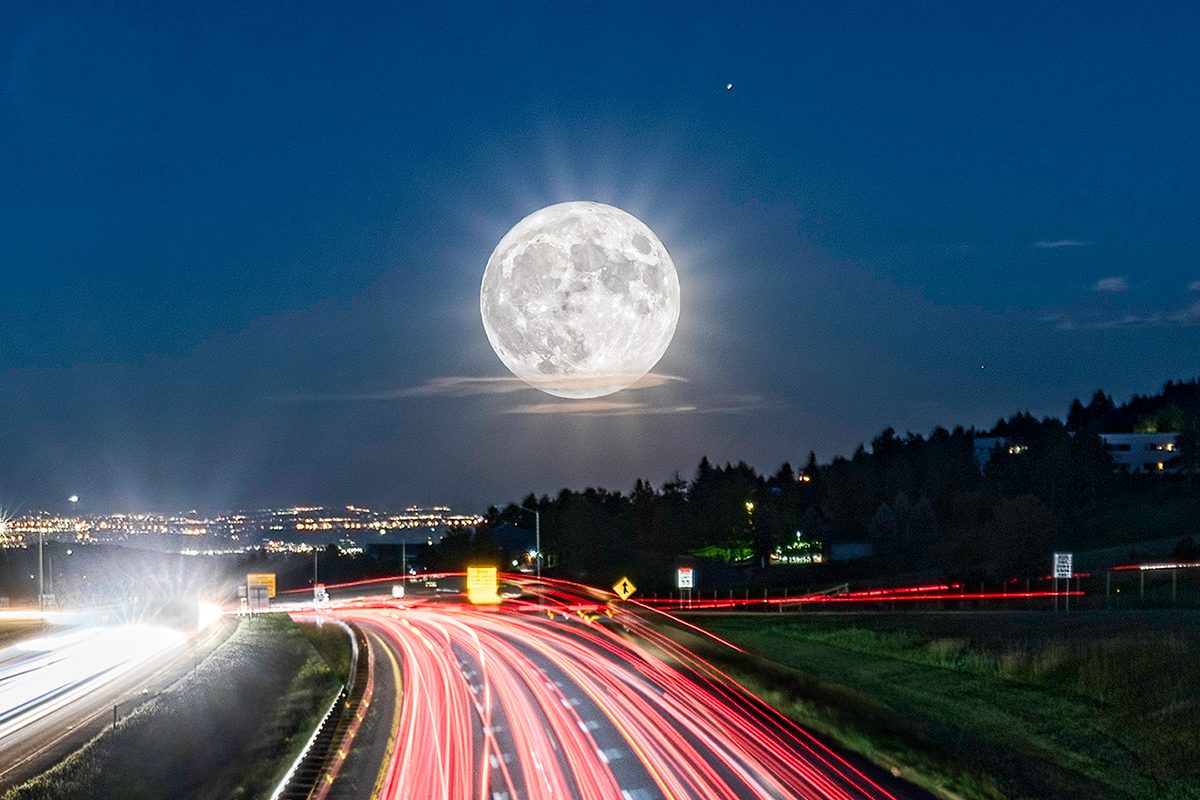
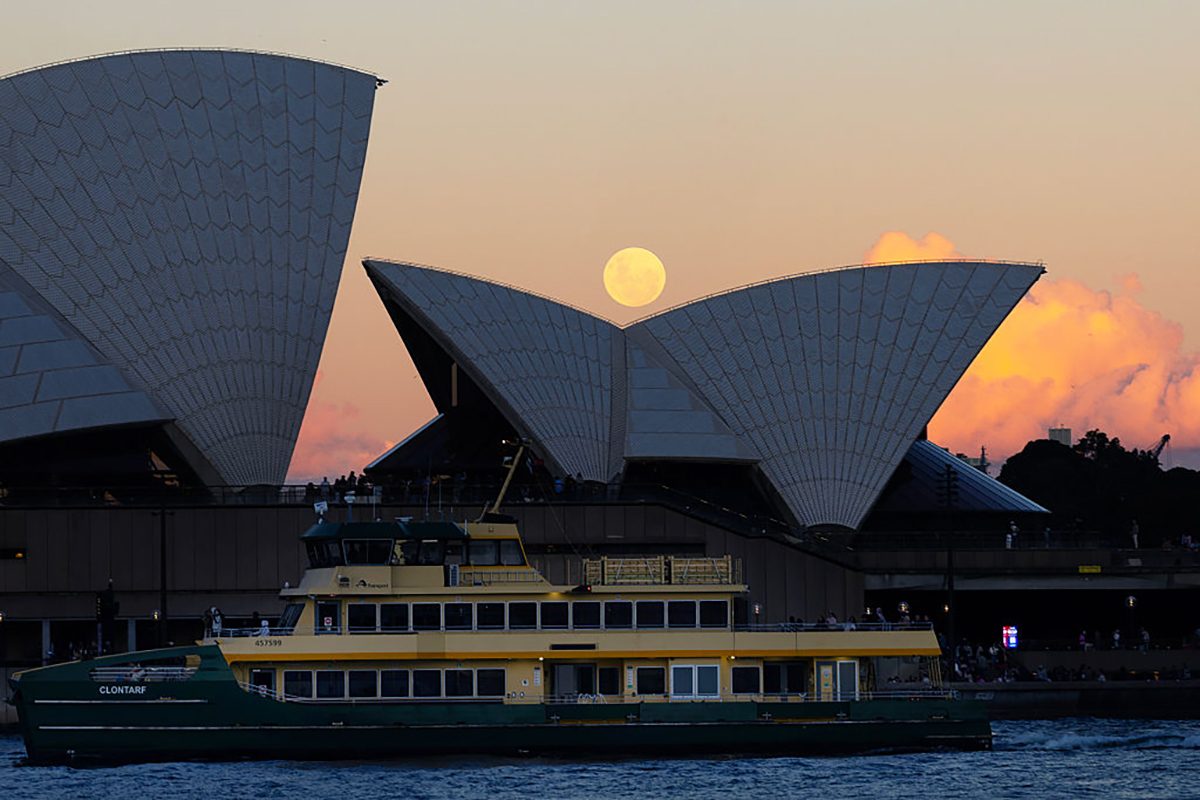
Another effect of the low-lying full Moon is that you might notice it looks much bigger than usual.
This is a commonly-observed phenomenon that occurs when the full Moon is close to the horizon. It’s known as the Moon illusion.
There doesn’t seem to be any definitive reason as to why the Moon illusion occurs.
It could be because of how we perceive the night sky as a dome above our heads, which in turn affects how we perceive high full Moons vs low full Moons.
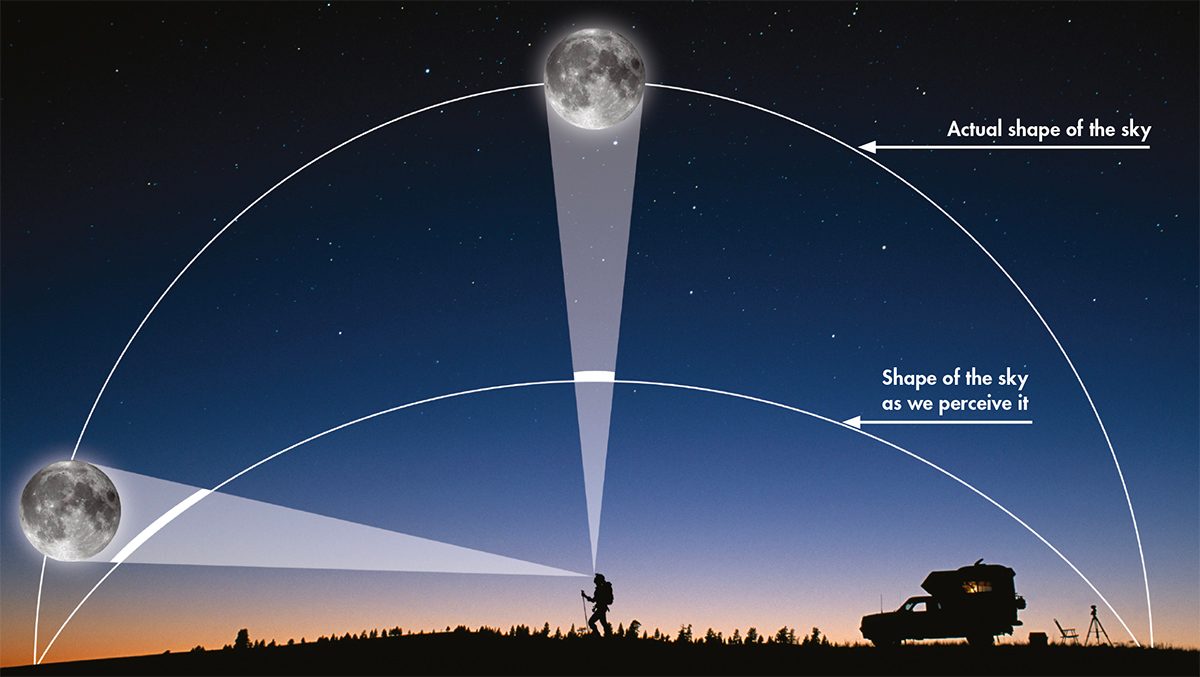
Or, it could be because a low-lying full Moon is closer to the ground, making it seem much bigger than large foreground objects like trees and buildings.
Either way, the effect of the Moon illusion can often cause observers to do a double-take, as it can really be a startling sight.
You might initially think you’re looking at the setting Sun, until you notice that it’s in the eastern portion of the sky at dusk and, therefore, must be the full Moon.
Because this is a low-lying Moon, you’ll need a clear horizon
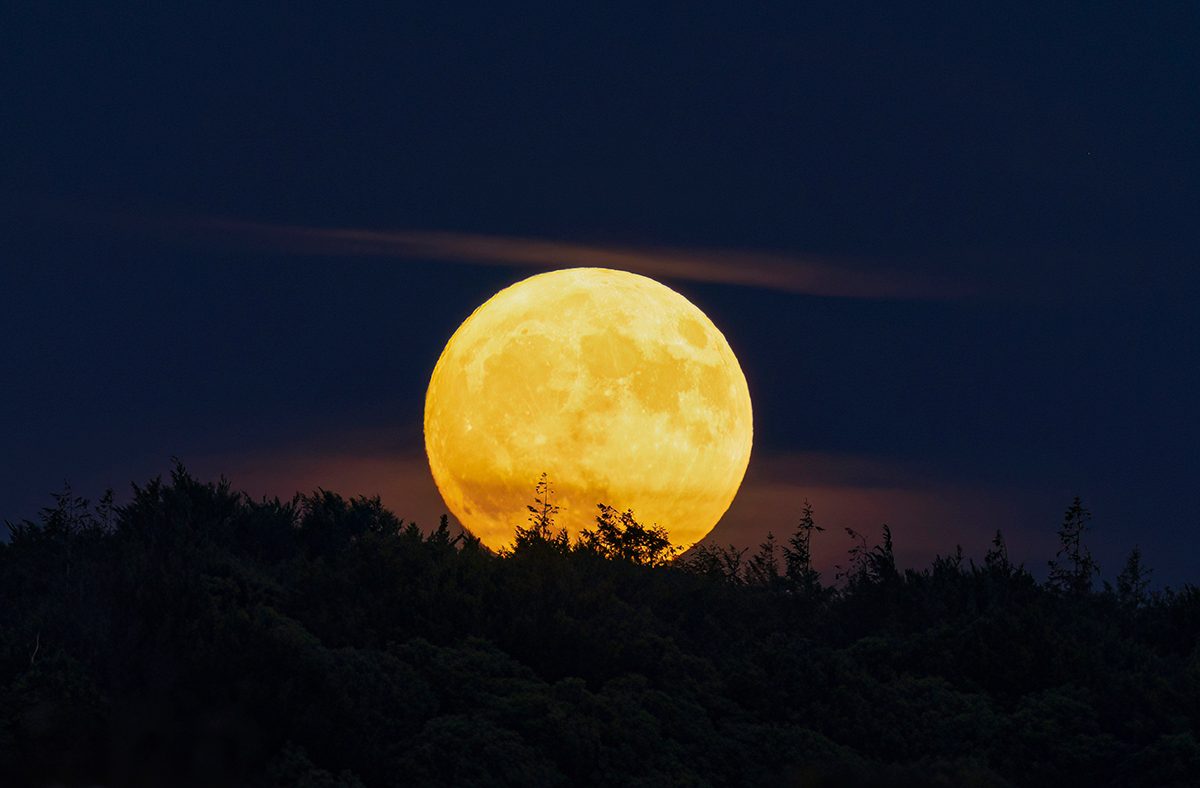
If you want to watch the Strawberry Moon rise and track it across the sky – and note the effects of both the orange-hued full Moon and the Moon illusion – you’ll need a clear southern horizon.
That’s because, as mentioned, the Strawberry Moon won’t rise very high, and will be one of the lowest full Moons of the year.
Find yourself a flat, clear southeastern horizon to watch the Strawberry Moon rise.
If your view to the south is completely clear, you’ll then be treated to a view of the full Moon throughout the night, right up to the moment to the moment it sets in the southwest around sunrise the following morning.
This is a micromoon
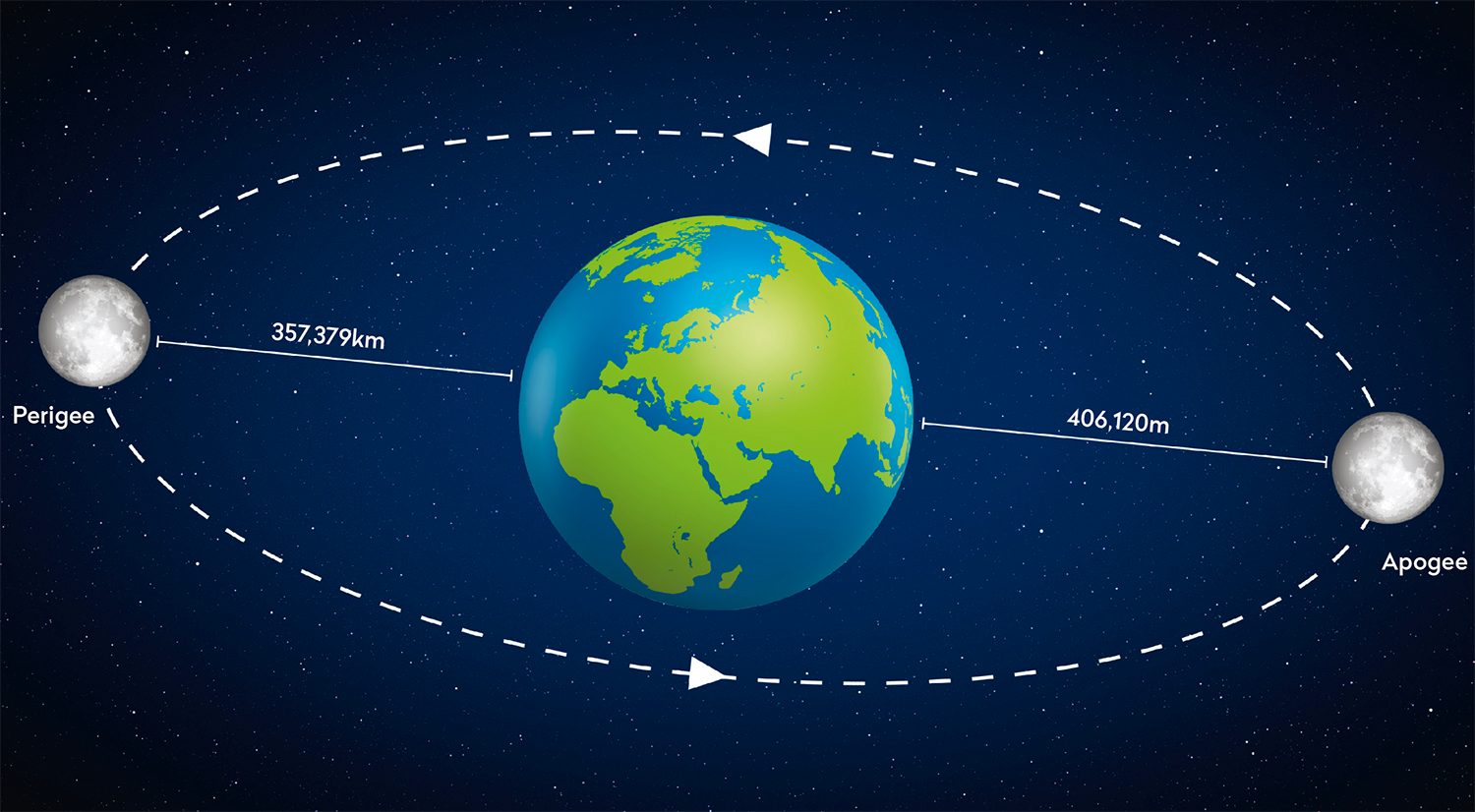
You may hear people describe the 2026 Strawberry Moon as a ‘micromoon’.
That’s because the full Moon will technically appear smaller than normal. In fact, it will be one of the ‘smallest’ full Moons of the year.
This happens because the Moon’s orbit around Earth isn’t a perfect circle; it’s a sightly squashed, elliptical shape.
That means sometimes the Moon is closer to Earth than at other times.
When the Moon is at its closest point to Earth – known as perigee – and it’s full, it’s informally known as a ‘supermoon’.
When the Moon is at its farthest point from Earth – known as apogee – and it’s full, it’s known as a ‘micromoon’.
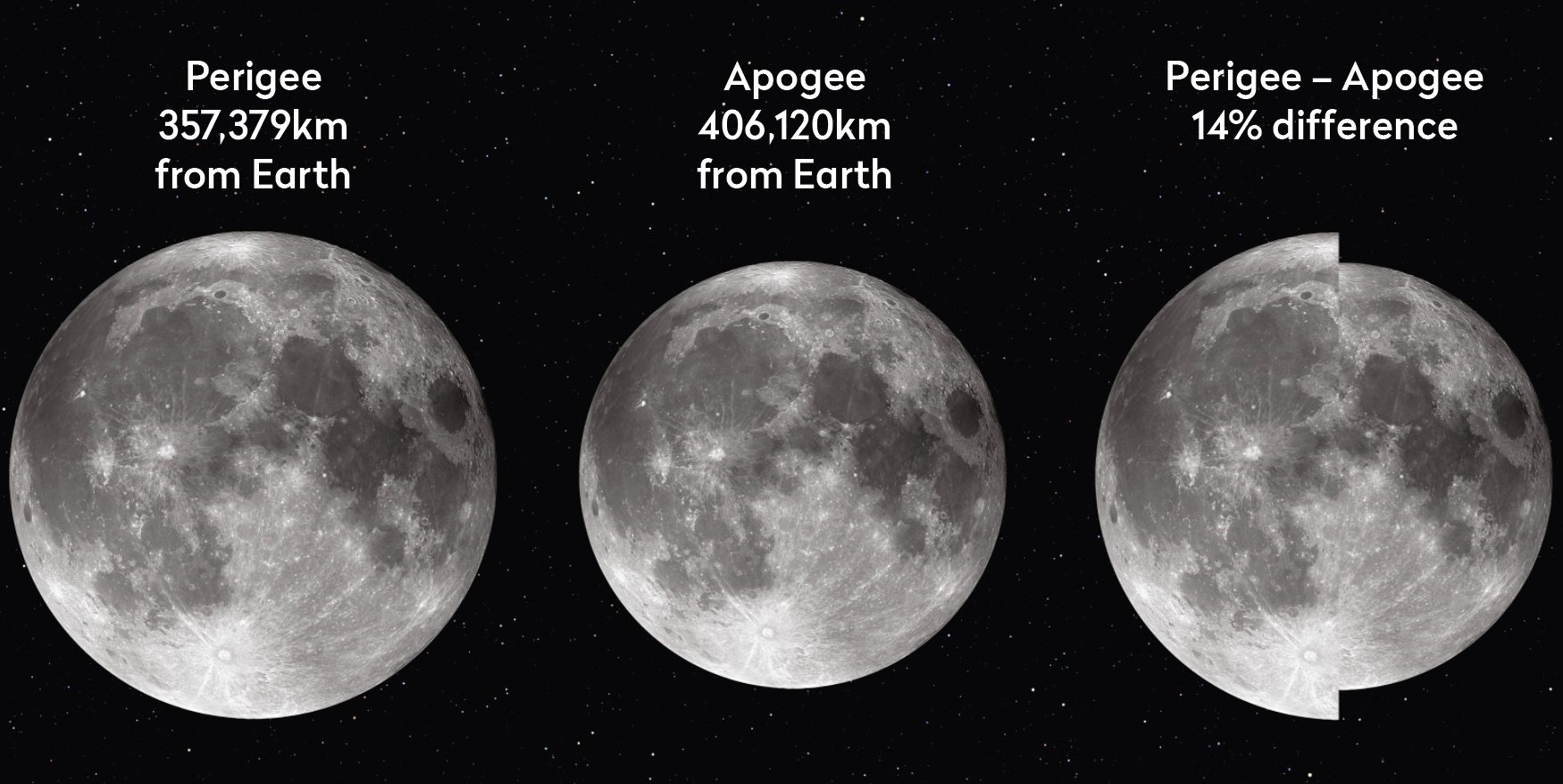
Tonight’s Strawberry Moon is a micromoon, meaning it should technically appear smaller than usual.
However, the effect is virtually impossible to notice with the naked eye and in reality, the full Moon won’t look any smaller than usual.
In fact, because of the aforementioned Moon illusion that occurs when the full Moon is low in the sky, this week’s micromoon may actually look enormous!
It should be the sixth full Moon of the year, but it’s actually the seventh
The Strawberry Moon is the name given to the full Moon in June, which normally makes the Strawberry Moon the sixth full Moon of the year.
That’s except, however, when there’s been a blue Moon before it.
RELATED ARTICLES
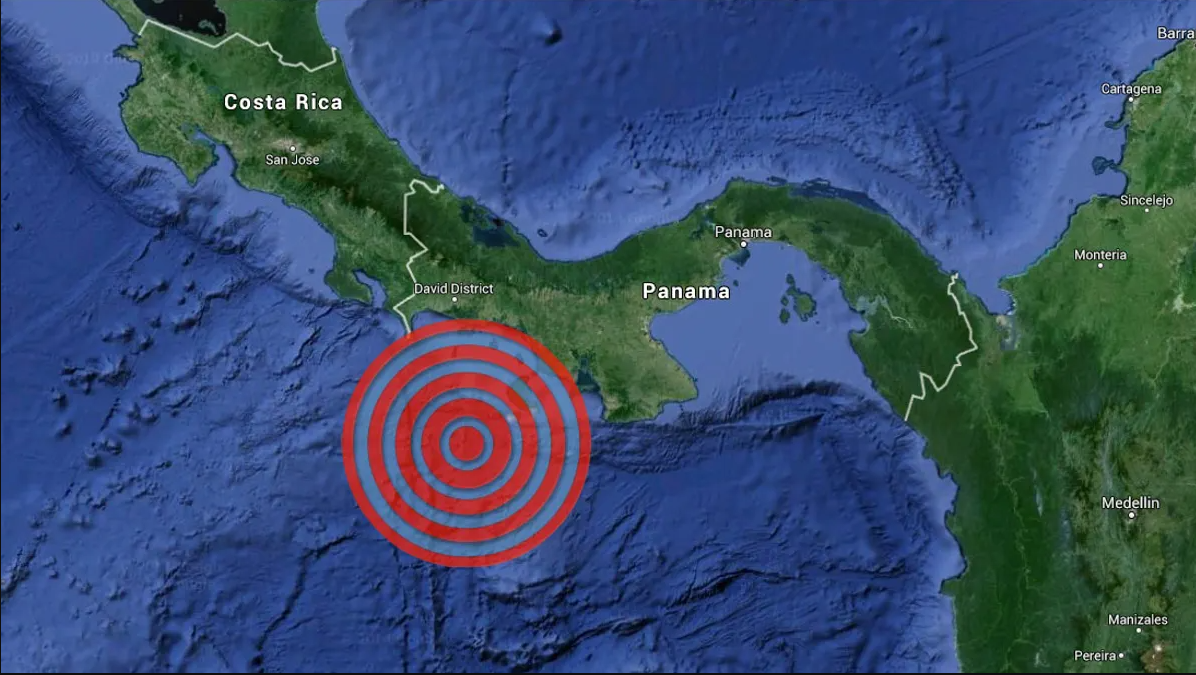
Powerful magnitude 7.7 ea...
A massive magnitude 7.7 earthquake has hit Panama, damaging buildings and causing widespread shaking. About 4
What to See in the Octobe...
Saturn reaches opposition, Neptune lingers near Saturn, Mars transits the Beehive, and Jupiter is occulted by

This was the last lake of...
In a polar epishelf lake, freshwater floats on seawater, creating a unique ecosystem Jérémie Bonneau tr
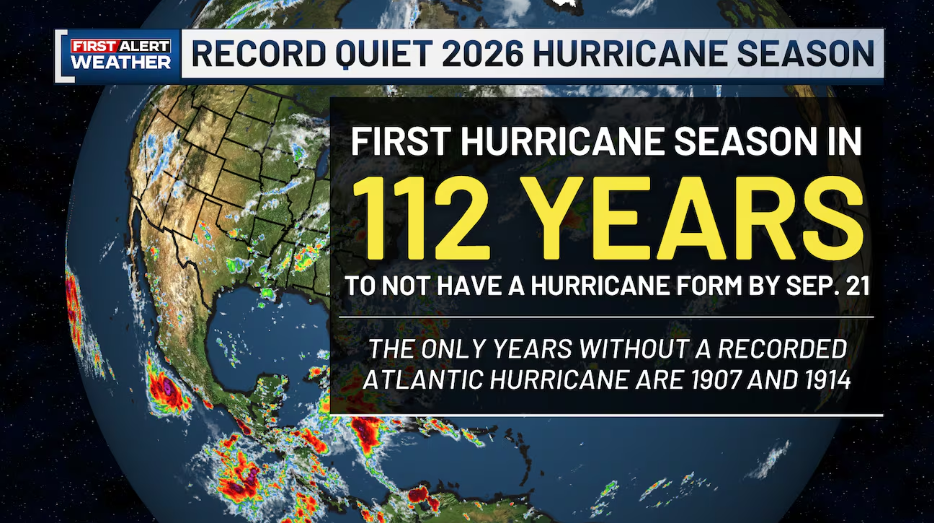
Atlantic goes without a h...
The Atlantic has never gone this late without a hurricane since modern satellite tracking began in 1966.
Hummingbirds are migratin...
Ruby-throated hummingbirds are starting their fall migration, and a new map shows when they typically move sou

 Photographer Finds Locations Of 1960s Postcards To See How They Look Today, And The Difference Is Unbelievable
  Hij zet 3 IKEA kastjes tegen elkaar aan en maakt dit voor zijn vrouw…Wat een gaaf resultaat!!
  Scientists Discover 512-Year-Old Shark, Which Would Be The Oldest Living Vertebrate On The Planet
  Hus til salg er kun 22 kvadratmeter – men vent til du ser det indvendigt
  Superknepet – så blir snuskiga ugnsformen som ny igen!
  Meteorite That Recently Fell in Somalia Turns Out to Contain Two Minerals Never Before Seen on Earth
  Nearly Frozen Waves Captured On Camera By Nantucket Photographer
  It’s Official: Astronomers Have Discovered another Earth